

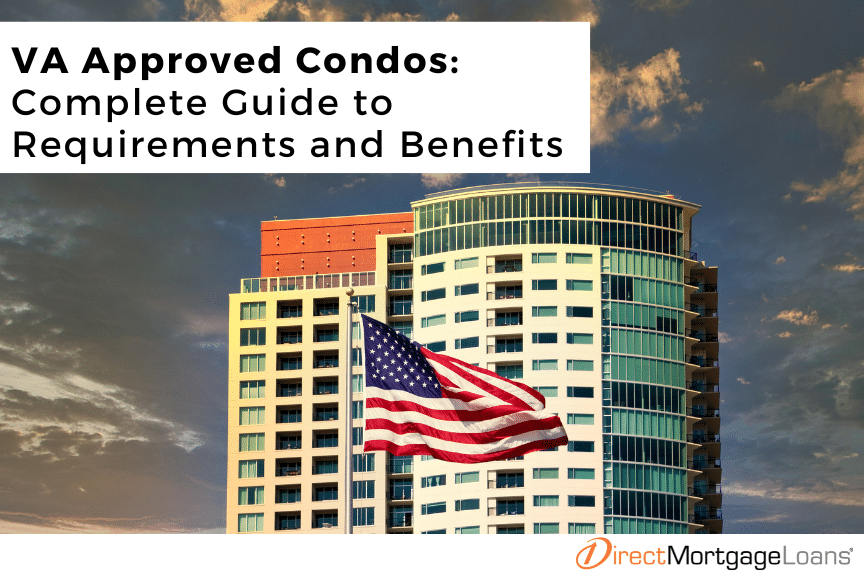
If you’re a Veteran or active-duty service member exploring homeownership, you may already know that VA loans are one of the most powerful benefits available to you. But what happens if your dream home isn’t a traditional house? Many buyers today are looking at condominiums for their lower price point, easier upkeep, and attractive amenities. To use your VA loan for a condo, though, the property must first be VA approved. This guide will walk you through what VA-approved condos are, the requirements, how to check if a condo qualifies, and what to do if the property you love isn’t yet on the VA’s list.
Subscribe to our blog to receive notifications of posts that interest you!
What are VA approved condos?
A VA-approved condo is part of a condominium development that has been reviewed and approved by the Department of Veterans Affairs. This means the entire community has met the VA’s standards for financial stability, owner-occupancy, and livability. Once approved, units within the complex are eligible for VA financing, giving you the chance to purchase with no down payment and no private mortgage insurance (PMI).
VA approval helps to ensure that you’re buying into a well-managed community where your investment is protected and your VA benefits can be fully used.
VA Condo Approval Requirements
Not every condo complex will qualify for VA financing. To gain approval, the development must meet several key requirements, including:
- Owner-occupancy levels: At least 50% of the units must be owner-occupied rather than rented out.
- HOA financial health: Fewer than 15% of owners can be behind on homeowners’ association (HOA) dues.
- Sales status for new builds: In newly built or converted complexes, at least 75% of the units must be sold.
- Multiple-unit rule: The complex must consist of more than one unit.
- Ownership concentration: No single entity, such as an investor, company, or individual may own more than 10% of the units.
These requirements help maintain the overall quality and stability of the development, reducing risk for both the buyer and the VA loan program.
How To Check If A Condo Is VA Approved
The VA maintains an online database called the VA approved condo list, which allows you to look up complexes by name or location. If the condo you’re interested in is on that list, it’s already approved. If not, your lender can help confirm eligibility or work with the condo association to begin the approval process.
At Direct Mortgage Loans, knowledgeable loan officers are familiar with navigating the VA database and can quickly determine whether a property is eligible, saving you time and stress during your search.
Benefits Of Buying VA Approved Condos
Choosing a VA-approved condo comes with the same advantages you’d expect when using a VA loan for a single-family home:
- No down payment required for most borrowers.
- No PMI (private mortgage insurance), which saves you money every month.
- Flexible credit and debt-to-income guidelines can make it easier to qualify.
- Potential funding fee waiver for Veterans with service-connected disabilities.
For many buyers, condos also add lifestyle perks such as community amenities, lower maintenance, and security features. Combined with VA loan benefits, it can be an affordable and convenient path to homeownership.
VA Condo Approval Types
When you check the VA’s list, you may notice different approval categories. Here’s what they mean:
- Accepted Without Conditions: The condo fully meets VA requirements and is eligible for financing.
- Accepted With Conditions: The condo is approved but has some flagged concerns, such as occupancy ratios. Buyers may need to sign additional acknowledgment forms to proceed.
- HUD Accepted: Some older complexes that were FHA-approved before December 2009 may still qualify under this category.
- Unaccepted: Either the condo never applied for VA approval, or it applied and was denied.
Why would a condo not be VA approved?
There are several reasons a condo may not appear on the VA’s approved list, including:
- The complex has never applied for VA approval.
- The community fails to meet financial or occupancy standards, such as too many late HOA payments or too few owner-occupied units.
- The HOA rules are too restrictive, for example, prohibiting owners from renting out their units, which is something the VA requires for military families who may need to relocate.
In these cases, approval may still be possible, but it often depends on whether the condo board is willing and able to go through the VA approval process.
VA Condo Approval Process
Unlike FHA loans, where a single unit can sometimes be approved, the VA requires the entire condominium project to be approved. The condo association (not the individual buyer) must apply by submitting documents about the community’s finances, rules, and structure.
Direct Mortgage Loans can help coordinate with the association and keep you informed throughout the process. While approval timelines vary, it can take weeks or even months depending on how quickly documents are provided.
Alternatives If A Condo Isn’t VA Approved
If the condo you love isn’t VA approved, you still have options:
- Request approval: Ask your lender to file an inquiry with the condo board to see if they’re willing to apply.
- Explore other loan types: Conventional or FHA financing may still work for non-approved condos, though they come with different requirements.
- Consider other properties: If approval isn’t possible, you may need to expand your home search to include VA-approved complexes or other property types.
Working with a loan officer at Direct Mortgage Loans can help you understand your alternatives and decide on the best path forward.
FAQs About VA Approved Condos
Does VA have an approved condo list?
Yes. The Department of Veterans Affairs offers an official online database where you can search for approved condo complexes by name, location, or state. This searchable list allows Veterans and their lenders to quickly confirm if a property is eligible for VA financing, helping you avoid surprises later in the homebuying process.
How hard is it to get a condo VA approved?
The difficulty of getting a condo approved can vary widely. The VA looks closely at the community’s finances, occupancy rates, and governing rules. Well‑managed developments with strong financial records and a high percentage of owner‑occupants usually move through the process smoothly. On the other hand, complexes with weak HOA budgets, high delinquency on dues, or restrictive bylaws can face delays or even denial. It’s important to note that the condo association, not the buyer, is responsible for filing the paperwork, which means the timeline often depends on how proactive and organized the board is. Working with a knowledgeable lender like Direct Mortgage Loans can help guide you through the process and set realistic expectations about how long it may take.
How long is a VA condo approval good for?
Once a condo project is approved by the VA, the designation typically stays in place indefinitely, as long as the community continues to operate within VA guidelines. However, changes such as shifts in owner‑occupancy rates, financial issues with the HOA, or modifications to the bylaws could trigger a review and affect its status. Lenders will always re‑check the condo’s approval status during each new loan transaction to make sure nothing has changed and that your financing remains protected.
What’s the difference between FHA and VA condo approvals?
Both FHA and VA require the condo project to meet specific standards before units can be financed, but they differ in how flexible they are. FHA allows what is called a “spot approval,” meaning in certain cases an individual unit can qualify even if the entire complex hasn’t gone through the full FHA approval process. VA does not permit this. For VA financing, the entire condominium development must be approved as a whole before any unit within it can be purchased with a VA loan. This distinction is important, as it means buyers using VA benefits need to make sure the entire community is eligible, not just the unit they are interested in.




Leave A Comment
You must be logged in to post a comment.